
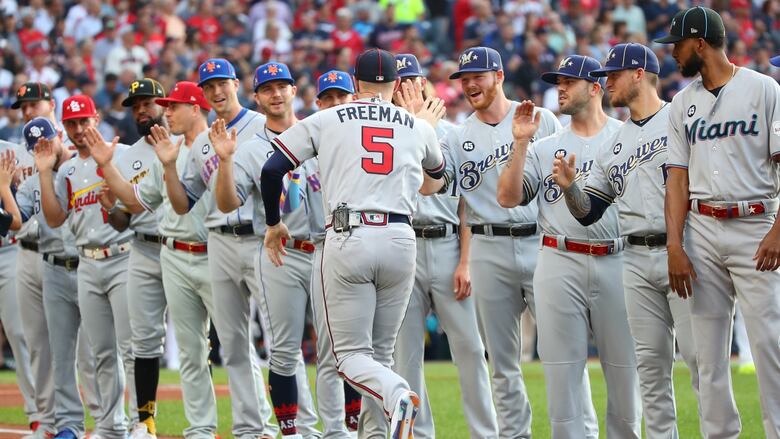
Have you ever thought about managing your own baseball team? Have you ever watched your favorite baseball team in the offseason and thought to yourself, “I can do way better than these guys”? Or maybe you have a crazy vision of having Tarik Skubal, Gunnar Henderson, and Shohei Ohtani all on the same team. Well, do I have the perfect thing for you: Fantasy Baseball.
Now, Fantasy Baseball isn’t as easy as Fantasy Football; in fact, I’d say it’s harder. But I can assure you that by the end of this article, you will be a full-fledged MLB Fantasy pro, ready to dominate your league.
Some of the things we will be covering include how fantasy baseball works, the scoring system, roster setting, drafting, waiver wire/free agency, and trades!
This story is going to be multiple parts, we’ll also put together some projections for you so you can create cheat sheets and understand why they are important. And last but not least, we’ll offer some strategy tips on how to win at Fantasy Baseball.
How does Fantasy Baseball work?
First off, we are going to break this down into sections, from Pre-Draft day, setting your lineup for your first matchup, to how trading works.
Pre-Draft
I recommend sitting down for about an hour or two and researching who you want on your team. Remember to always have a backup plan, as anyone picking before you can choose exactly who you were eyeing. Instead of just choosing one second baseman to scout, look at about five. Once you’ve chosen your starting five, take a look at their 2025 projections. Research who they play during the season, and start making a cheat sheet. It’s always better to have these names ready pre-draft, as you may only have anywhere from 30 seconds to 2 minutes to make these picks on Draft Night. Don’t worry, though—there are tons of websites, including this one, that will help you with a cheat sheet for Draft Night!
Draft Night
The most fun night of the whole year—what you’ve spent weeks waiting for—is finally here. If you’ve played Fantasy Football before, it’s exactly the same process. If you haven’t, depending on where you are drafting, a full list of players’ names will pop up, ranked by their current status.
For example:
- Shohei Ohtani
- Bobby Witt Jr.
- Aaron Judge
Once it’s your turn, you will look through the list of players and choose who you want. But remember to check your cheat sheet and mark down who you’ve drafted and at what position! You don’t want to accidentally waste your top picks on two second basemen.
From there, it’s just a rinse, wash, and repeat cycle. Depending on your league, you’ll draft anywhere from 14-22 players. You can draft as many second basemen or catchers as you’d like, but remember, depending on your league, you can only start one in each position. This is how a standard league’s roster looks:
- 1x 1B
- 1x 2B
- 1x SS
- 1x 3B
- 3x OF
- 1x UTIL
- 3x BEN
- 5x P
You may be asking yourself, “How should I draft my team?” Well, I always recommend starting with a solid offense; they’ll be the ones consistently bringing in points for you. But don’t forget about your pitching! Personally, I always like to get at least two aces before expanding further on offense. After that, you can study up for those 2-3-4-5 pitchers and draft them in the mid-late rounds. But really, it’s all up to you—there’s no wrong way to draft in Fantasy Baseball!
Some tips the Bears recommend!
- Remember to draft a solid day-to-day utility man who occasionally plays, in the late rounds.
- Draft a closer in the late rounds (It’s like a kicker in Fantasy Football—you might need them).
- Be flexible—draft night is full of surprises. Your whole cheat sheet can get wiped out, and you’ll be stuck doing it on the fly.
Setting your roster
Now that you have your team, it’s time to set your roster. Remember, you’re running a baseball team now, so you have to make sure of a few things.
- Make sure the player you have selected is playing that day. Teams have almost two rest days every week if they aren’t playing a long stretch, and players will occasionally get rest days as well.
- Make sure your pitcher is set. If you don’t have a starting pitcher, you can always throw in a relief pitcher, although it is VERY risky to go that route.
- Keep an eye on players’ stats. If a player is in a slump, don’t be scared to put them on the bench. Remember, you won’t hurt their feelings.
- Keep an eye on the waiver wire. Players are always getting dropped from other teams and added to the waiver wire. If your league has waiver claims and not free agent bidding, put in a waiver for the player you want. The worst thing that can happen is someone with a higher waiver claim gets them.
This part will be the hardest—you’ll need to take a peek at your lineup every morning to ensure that your full lineup is ready to go.
Points Scoring
Now that your lineup is set, let’s take a look at how the points scoring works so you can better understand it!
The most popular scoring type in Fantasy Baseball is head-to-head scoring, which is very similar to how Fantasy Football scoring works. This is the standard scoring for Fantasy Baseball:
Batting:
- Runs Scored = 1
- Total Bases = 1
- RBI = 1
- Walks = 1
- Strikeouts = -1
- Stolen Bases = 1
Pitching:
- Innings Pitched = 3
- Hits Allowed = -1
- Earned Runs = -2
- Holds = 2
- Walks = -1
- Strikeouts = 1
- Wins = 2
- Losses = -2
- Saves = 2
If you’re still confused about how the scoring works, here are some examples to help you better understand it:
- Corbin Carroll hits an RBI single and steals second base. He would gain 3 points for the RBI, the hit, and the stolen base.
- Corbin Burnes strikes out 7, walks 2, allows 1 run, but wins the game. He would receive 9 points for striking out 7 batters and winning the game. However, he’d lose 3 points for walking 2 batters and allowing a run.
- Justin Martinez strikes out one and saves the game for the Diamondbacks. He’d gain 3 points for the save and the strikeout.
Waiver Wire & Free Agency
This process is very similar to how Fantasy Football’s waiver wire works. If you’re unfamiliar, the waiver wire is for players who aren’t owned by a team. Teams can make a claim on these players, usually with a priority based on standings or random order (some leagues have a bidding system). Leagues have a set day for claims, and the highest priority team will receive the player.
Example:
Waiver Wire Player: Shohei Ohtani
- Dodgers – 12
- Diamondbacks – 9
- Athletics – 1
Athletics receive Ohtani due to being number 1 on the waiver list
Free Agency: If a player clears waivers, they will head to free agency. From then, teams no longer need to place a waiver claim and can pick them up outright, as long as their roster has space.
Trading/Trade Deadline
Trading players is always a very fun battle. If you aren’t familiar with what a trade is, it’s where you help address weak spots in your roster or swap players based on performance—like trading a pitcher for a hitter. But remember, it’s always important to evaluate trades carefully, keeping in mind the needs of both teams.
The trade deadline is a week set by the commissioner where trades are no longer accepted. (Not all leagues have a deadline set up.)
–
Now that you have the basics down for Fantasy Baseball, start up a mock draft and prepare for the upcoming season! Remember, keep checking back at Bear Sports News, for when our projections, cheat sheets and more release!


 Bear Sports News
Leave a comment