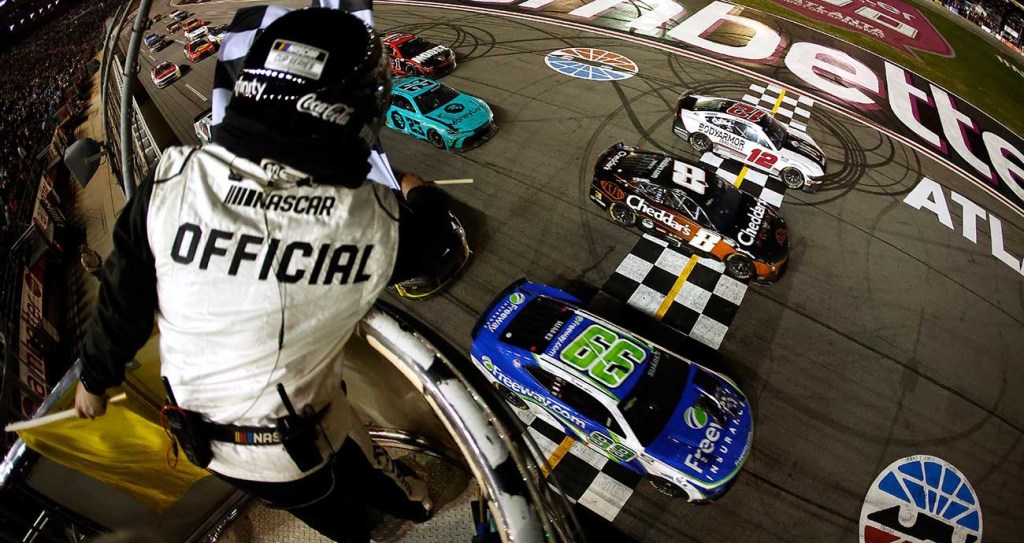
NASCAR’s inconsistency is once again casting a long shadow over the sport, overshadowing the on-track action and leaving a sour taste in the mouths of many fans. Sunday’s race at the newly reconfigured Atlanta Motor Speedway, while showcasing thrilling racing, is now being dissected and debated due to a controversial late-race caution. It’s a frustratingly familiar narrative: NASCAR’s officiating, rather than the drivers’ skills, is dominating the post-race discussion. This is particularly unfortunate because, in my opinion, the racing itself was fantastic. The new Atlanta layout produced an exciting event, but NASCAR’s inability to establish a consistent framework for calling cautions threatens to undermine the very product they are trying to showcase. Today, we’ll delve into this issue, exploring the perspectives of both the fans and NASCAR officials. Is racing back to the line the solution? Or does it potentially create even more dangerous scenarios?
NASCAR Official Perspective:
For NASCAR officials, the decision to throw a late-race caution is never taken lightly. They must constantly balance the inherent desire for a thrilling, edge-of-your-seat finish with their paramount responsibility: ensuring the safety of the drivers, crew members, and everyone involved in the event. The controversial caution at the end of Sunday’s Cup race at Atlanta Motor Speedway didn’t happen in a vacuum; it occurred just a day after NASCAR faced intense criticism – both from fans and within the garage – for not throwing a caution in a strikingly similar situation during the Xfinity Series race. This prior incident, where several cars crashed in the top 10 on the final lap and the race finished under green, clearly played a significant, perhaps even decisive, role in Sunday’s call. As NASCAR Managing Director of Competition, Elton Sawyer, stated after the Xfinity race, “So a situation that comes up today like (Saturday) night will be a caution.” This statement, as reported on Jeff Gluck and Jordan Bianchi’s podcast, “The Teardown,” wasn’t just a casual comment; it signaled a clear, almost public, shift in NASCAR’s approach to late-race caution calls. It was an acknowledgement of a perceived error and a promise to do things differently.
According to “The Teardown” podcast, the pressure on officials to avoid a repeat of Saturday’s controversy was immense. They were acutely aware of the criticism they had received and were determined to avoid any perception of negligence, especially after publicly acknowledging their mistake in the Xfinity race. This heightened sensitivity, combined with the incredibly close proximity of the cars as they battled for the lead in the Cup race’s closing laps, likely heavily influenced their decision. The potential for a major incident, especially with the added pressure of the previous day’s controversy hanging over them, likely pushed them toward a more cautious approach. They were faced with a difficult choice: let the drivers race it out, potentially leading to a spectacular but possibly dangerous finish, or err on the side of caution, potentially denying fans a thrilling climax but prioritizing driver safety. In that split-second decision, with the memory of Saturday’s criticism fresh in their minds, they opted for the latter. This decision, while understandable given the circumstances, reignited the debate about NASCAR’s consistency in officiating and whether they are prioritizing entertainment or safety.
Fan Perspective:
From the fans’ perspective, the frustration surrounding the late-race caution at Atlanta is entirely understandable. They were, once again, robbed of a potential three-wide photo finish, a spectacle that embodies the heart-pounding excitement of NASCAR racing. The disappointment is amplified by the feeling of déjà vu, a sense that NASCAR’s officiating is consistently inconsistent, leaving fans wondering what to expect from one race to the next. As one fan (@Dude_Squonk) expressed on X (formerly Twitter), “NASCAR needs to make up their mind on how they call these races. One week they say they’ll be better, the next they’re letting cars race back to the line while the field is wrecking behind them. It’s ridiculous.” This sentiment captures the core of the fans’ anger: it’s not just about this one call, but about the larger pattern of inconsistent officiating that undermines the integrity of the sport.
Another fan, Kyle McFadden (@ByKyleMcFadden), echoed this frustration, stating on X, “How many times are we gonna have races end under caution when they shouldn’t? Absolutely pathetic. They need to figure this out.” This tweet highlights the growing weariness among fans, who are tired of feeling like they are being cheated out of the most exciting moments of the race. They invest time, money, and emotional energy into following NASCAR, only to have the climax of the event decided by what many perceive as an arbitrary and inconsistent application of the rules. The feeling is that NASCAR is playing with the fans’ emotions, building up the anticipation of a thrilling finish only to snatch it away at the last moment. This inconsistency erodes trust in the sport’s leadership and leaves fans questioning whether the outcomes of races are being decided fairly. They argue that if NASCAR wants to maintain its fan base, they need to establish clear and consistent rules regarding cautions, especially in the closing laps, and stick to them. The current system, where calls seem to be made on a whim, is simply not sustainable.
Conclusion:
The controversy surrounding the late-race caution at Atlanta Motor Speedway underscores the complex balancing act NASCAR officials face. Fans understandably crave thrilling finishes and a consistent application of the rules. They were denied a potential three-wide shootout and, as we’ve seen from their reactions on social media, are frustrated by what they perceive as inconsistency in NASCAR’s officiating. On the other hand, officials are tasked with prioritizing driver safety, a responsibility that weighs heavily on their decisions, especially in the wake of the previous day’s Xfinity race controversy. As difficult as it is to please everyone, the current system seems to leave both fans and drivers feeling short-changed at times.
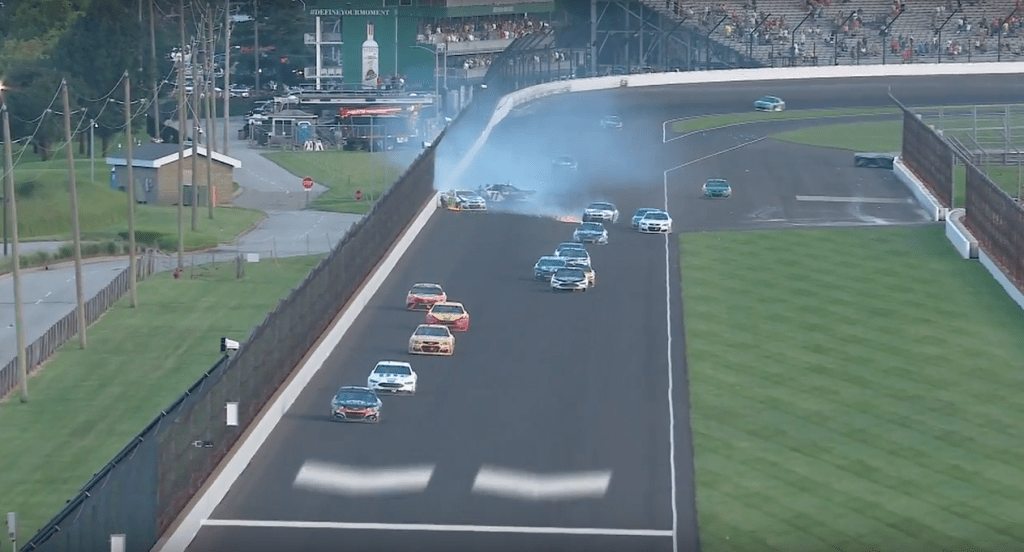
NASCAR’s caution rules, particularly those governing green-white-checkered finishes, have evolved significantly over the past decade, reflecting the ongoing struggle to find the right balance between safety and entertainment. From freezing positions on the first lap of a GWC attempt (2010-2015) to establishing an “overtime line” (2016-2017) and ultimately returning to a system with unlimited attempts to finish under green (2017-present), NASCAR has demonstrated a willingness to adapt and experiment. These changes, as documented in NASCAR’s rule book, highlight the constant push and pull between allowing drivers to race to the finish and preventing potentially dangerous situations.
While many fans advocate for racing back to the line, even if it means extending the race, the potential consequences of such a policy cannot be ignored. Ultimately, NASCAR officials have to make split-second decisions with driver safety as their primary concern. While the call at Atlanta may have been technically correct, especially given NASCAR’s pre-race commitment to call cautions in similar situations, it also highlighted the ongoing need for clearer guidelines and more consistent officiating. As frustrating as it is for fans to see a potential thrilling finish waved away, the alternative – a major last-lap wreck – is a far more sobering prospect. While I personally am all for racing back to the green, we as fans, need to give NASCAR the benefit of the doubt sometimes, that they are doing their best to make the right decision in a split second. Perhaps a deeper dialogue between NASCAR, drivers, and fans is needed to explore potential solutions that can satisfy the desire for exciting finishes while ensuring the safety of all involved. It’s a conversation that needs to happen if NASCAR wants to avoid these recurring controversies and maintain the trust of its fan base.

 Bear Sports News
Leave a comment