

A Note to Our Readers:
At Bear Sports News, we want to make it clear that this story is not intended to be political, nor are we endorsing any candidates or policies. Our focus is solely on the sports side of the discussion—specifically the future of the Arizona Diamondbacks and the potential renovations to Chase Field. We’re reporting on the facts surrounding HB2704 and its impact on the team, the stadium, and the fans. Our goal is to provide the community with a balanced and informed view of how this could affect the game we all love, without any political bias.
Coming up on three weeks now, the Arizona Senate Finance Committee narrowly approved HB-2704 with a “Do Pass Amended” recommendation, sliding through by a single vote—4 to 3. For those unfamiliar, HB-2704 is a bill that could drastically reshape the future of Chase Field and the Arizona Diamondbacks. At its core, the bill allows the Diamondbacks to keep a portion of the sales tax revenue generated inside the stadium and reinvest it directly into renovations and upgrades, without requiring voter approval.
After the Senate Finance Committee’s approval of HB2704 on March 24, 2025, the bill is scheduled for review by the Senate Appropriations Committee. Following this, it will proceed to the Senate Rules Committee to ensure compliance with legislative procedures. If it passes these stages, the full Senate will debate and vote on the bill. Should both the House and Senate approve the bill, it will be sent to the Governor Katie Hobbs for signature, enacting it into law.
The Diamondbacks have already pledged $200–$300 million of their own money toward revamping Chase Field. Those funds would target long-overdue fixes, starting with the roof system. While the retractable roof now can open and close with fans inside, it does so at a snail’s pace. Creating the real possibility of a rain delay or even a rainout. Just last season, that exact issue became a reality. If there are fans in the stadium, the roof legally can’t be opened or closed, which proved costly during a sudden rainstorm.
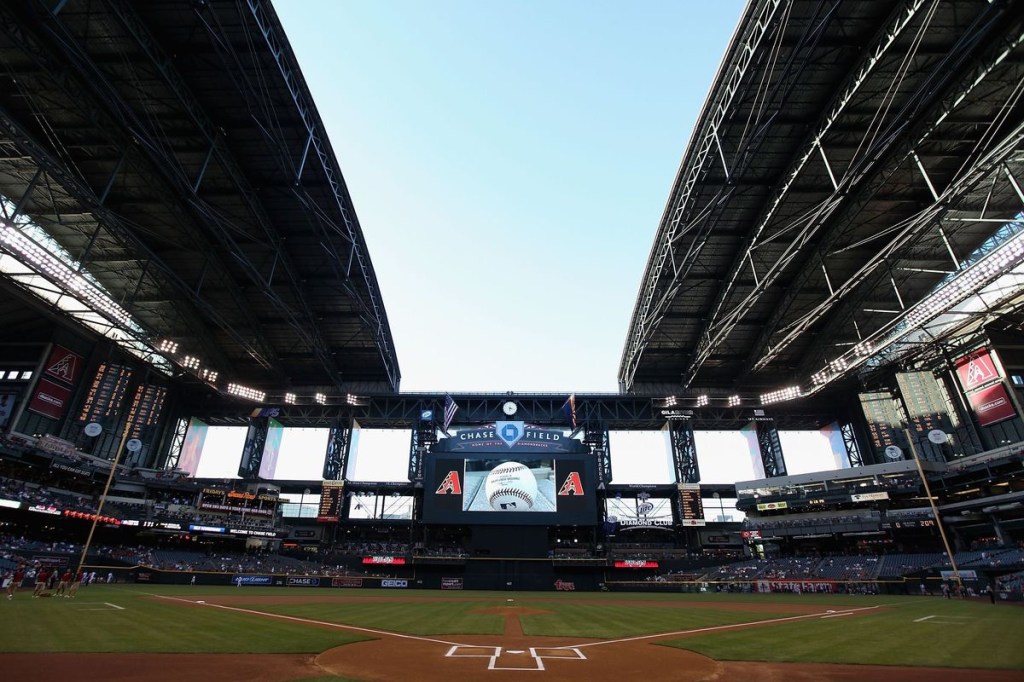
The problems don’t end there. Fans can attest to the outdated HVAC system that struggles to cool the ballpark efficiently during the scorching Arizona summers. On top of that, the stadium needs substantial upgrades to its plumbing, concrete structure, video boards, and club seating. This isn’t a wish list. It’s a matter of keeping the stadium operational and competitive.
What happens if the bill doesn’t pass? According to multiple insiders, including team executives and lawmakers, the Diamondbacks may very well explore relocation. With the Coyotes already packing up and leaving, the idea of another Arizona sports team skipping town is one the public and politicians can’t afford to ignore.
I’ve been following this saga from the beginning—long before HB-2704 even made headlines—and today I’m breaking down every angle. What do the Diamondbacks really need from this bill? What financial tradeoffs are involved? What would Arizona stand to lose or gain? And most importantly, how would this impact the greater community?
The Breakdown: What HB-2704 Actually Does
Let’s start with the facts. HB-2704 is designed to give Maricopa County more flexibility in working with the Diamondbacks on either renovating Chase Field or building a new stadium altogether. It expands the authority of the Maricopa County Stadium District, allowing it to:
• Form or use an existing stadium district,
• Issue municipal bonds to raise funds for the project,
• Repay those bonds using revenue generated from the stadium (like sales tax on tickets, food, parking, and merchandise),
• And enter into a public-private partnership with the Diamondbacks.
A major point of contention? It doesn’t require a public vote to use these public financing tools. That alone has raised eyebrows.
The Diamondbacks are asking to keep 5% of the already-existing 5.6% sales tax collected at the stadium. Essentially redirecting it back into the facility. This wouldn’t increase taxes; it would just reallocate revenue that would otherwise go to the state, county, and city.
CEO Derrick Hall emphasized this in a interview with Arizona Sports
“If we can look at some of the sales tax we’re generating for state, county, city, put that back into the stadium—not to the D-backs, not to our operations—but merely for the renovation each and every year so you have that funding pipeline, that’s what makes the most sense. And that’s what most municipalities are doing for their stadiums.”
Arizona already uses a similar financial setup with the Arizona Cardinals’ stadium in Glendale, where event-related taxes help fund stadium maintenance and upgrades. The Diamondbacks are simply asking for a comparable arrangement.
According to Forbes, the D-backs generated $328 million in revenue last season. Under HB-2704, that could translate to roughly $16.4 million per year being reinvested into Chase Field.
What Arizona Could Lose
Now let’s talk numbers. Opponents of the bill point out that allowing the Diamondbacks to redirect sales tax revenue would mean the state loses out on approximately $15–$20 million annually. Money that currently goes toward public services like roads, safety, and infrastructure.
It’s important to note that the 0.6% portion of the sales tax dedicated to education would remain untouched. Still, critics argue that redirecting millions from the state budget could harm essential services at the local level.
According to the Arizona Department of Revenue’s 2024 report:
• Arizona collected over $28.2 billion in total tax revenue.
• $14.8 billion went to state agencies.
• $7.8 billion went to cities.
• $2.9 billion went to counties.
• $2.6 billion was returned as taxpayer refunds.
Maricopa County alone brought in $142 billion in net taxable income, collecting $7.1 billion in tax revenue. While those are big numbers, every dollar still matters when it comes to budgeting for public resources.
The Fans’ Perspective
At the end of the day, it’s the fans who stand to gain—or lose—the most.
For the everyday Arizona sports fan, this bill offers something rare: the chance to keep their favorite baseball team right here in the Valley without paying anything extra out of pocket. It’s a win-win scenario. Think Moneyball, the money generated inside the stadium stays there, reinvested into the facility that fans know and love. And in return? A modernized, upgraded ballpark experience that makes coming to games even better.
Last year, Arizona sports fans already endured the heartbreak of the Coyotes packing up and heading to Utah. It sent a clear message: if the state doesn’t invest in its teams, they will find somewhere else that will. And let’s be real, losing the Diamondbacks would be devastating. This isn’t just a team; it’s part of Arizona’s identity. From the magical 2001 World Series run to the unforgettable moments during 2023’s Cinderella journey to the Fall Classic, Alex Thomas, the 4 back to back HR’s, Brandon Pfaadt, this franchise has embedded itself into the culture of Phoenix and beyond.
Fans deserve to watch their team play in a stadium that reflects that legacy—and this bill might be the only way to make that happen.
The Diamondbacks’ Stance
It’s no secret the Arizona Diamondbacks have a long list of repairs needed for Chase Field. From a sluggish roof system that threatens rain-outs, to outdated plumbing, HVAC, concrete issues, and aging video boards, the ballpark is showing its age. But beyond the list of problems is a message that’s become increasingly clear: the Diamondbacks want to stay in Arizona.
They’re not threatening relocation as a scare tactic. They’re at the table, talking to lawmakers, working to find a solution. That speaks volumes. The franchise is willing to commit $200–$300 million of its own money to get the job done, but they need help to cover the rest.
CEO Derrick Hall has made it clear that none of this money would be funneled into operations or player salaries. It’s strictly for renovation.
Put simply, the Diamondbacks are doing what every sports franchise says they’ll do but rarely follow through on: they’re trying to stay rooted in their home city, and doing it in a way that doesn’t burden the public with new taxes.
Final Thoughts: Arizona Needs the Diamondbacks
At the end of the day, the Diamondbacks need to stay in Arizona, and Arizona needs the Diamondbacks. The energy that swept through the state during that magical 2023 playoff run was unforgettable. For a moment, it felt like the entire state was rallying behind the same cause. That’s not just baseball. That’s community.
So it’s honestly frustrating that relocation is even part of the conversation. This isn’t a case of a team threatening to leave unless they get a brand-new stadium built from scratch with taxpayer money. This is a team asking to use a portion of revenue they’re already generating to make improvements to a stadium the state owns. A stadium that houses 81 home games a year, plus events, something that brings thousands of fans downtown and generates millions in economic activity.
The bill isn’t a burden on taxpayers. It’s a smart reinvestment in a product that creates revenue, memories, and pride. The $15 to $20 million per year the Diamondbacks are asking to keep isn’t even a drop in the bucket compared to Arizona’s overall budget. To let that relatively small amount of money be the reason a Major League Baseball team considers leaving the state? That would be a historic mistake.
Most fans in Arizona want one thing—for their team to stay. We’ve grown up with the Diamondbacks. We’ve cheered for them during the highs and stuck by them through the lows. Losing this team would be a gut punch that Arizona sports fans don’t deserve.
The Diamondbacks are doing their part. Now it’s time for lawmakers to do theirs.



 Bear Sports News
Leave a comment