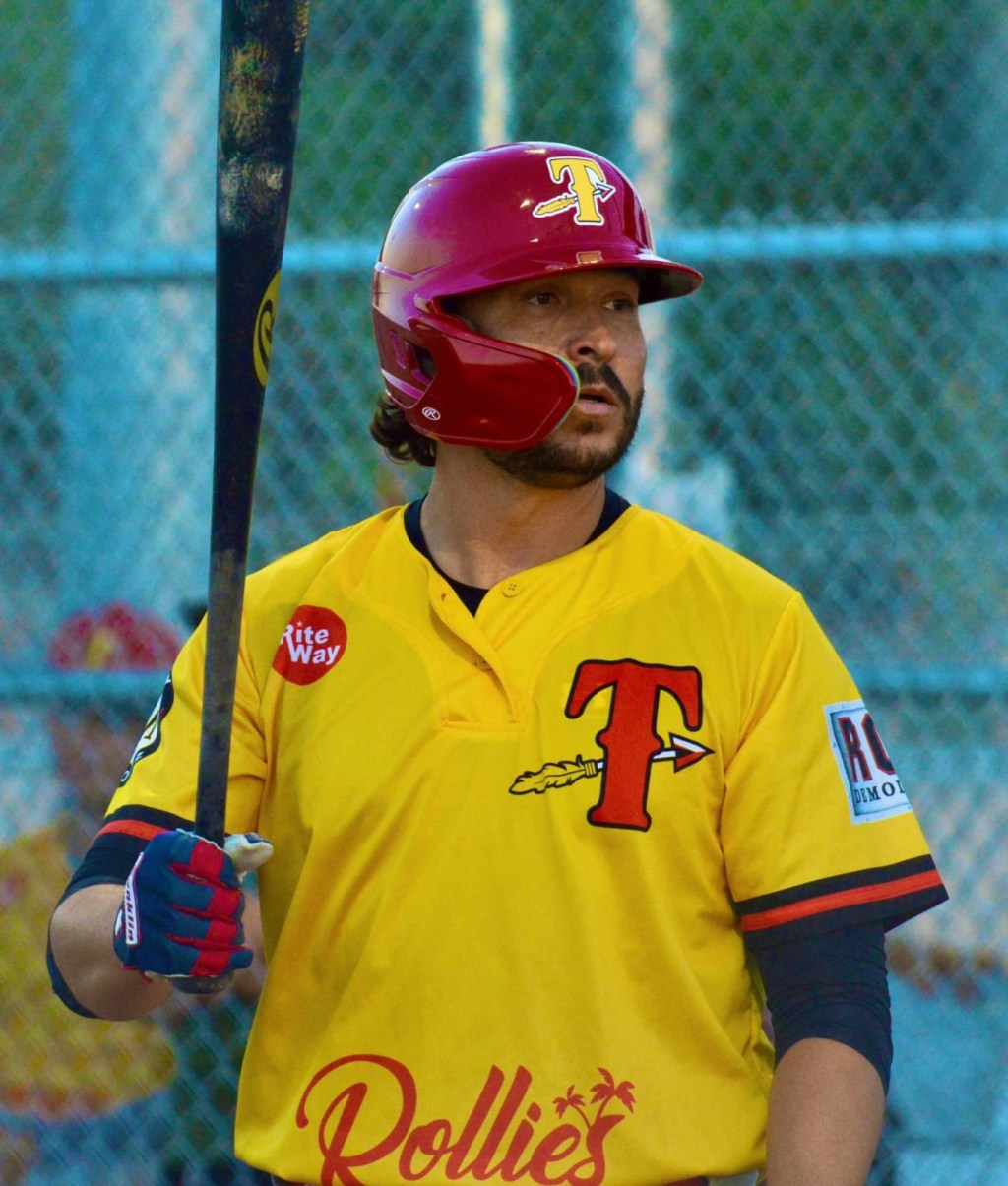
Now that the Tribe’s season is slowly winding down, with only one more game left on the calendar, we caught up with the ever-busy Matt Jankowski. Pitcher, outfielder, occasional infielder if the team needs him, and one of the Tribe’s most consistent personalities, Jankowski has been everywhere this season: in the lineup, in the dugout, and sometimes back on the mound where he’s reminded himself why he still loves the game.
Jankowski joined the Old Pueblo Tribe after attending open tryouts. He and co-owner Marcus Catalano had crossed paths earlier in the year, both playing on a Southern Arizona all-star team that faced Team Germany and the Irish Wolfhounds, but Matt’s connection to baseball runs far deeper than the Tribe alone.
Roots in Missouri, Nevada, and Friendship on the Field
“I don’t even remember exactly what got me into baseball because I’ve always been doing it,” he said. Born in Missouri into a family of St. Louis Cardinals fans, baseball was simply background noise and backyard play. “There was always baseball on the TV,” Jankowski told us, remembering afternoons playing with his brother in the yard and the basement. He turned forty just a few days ago, and the affection for the game, he says, hasn’t faded. If anything, it’s only grown.
As Jankowski’s childhood turned into adolescence, baseball became more than fun — it became a skill he could lean on. By 11 or 12, coaches started noticing. “That’s about when people started reaching out — All-Star teams, club ball,” he said. “It started around that age and then it’s just been one of those things that I stuck with.”
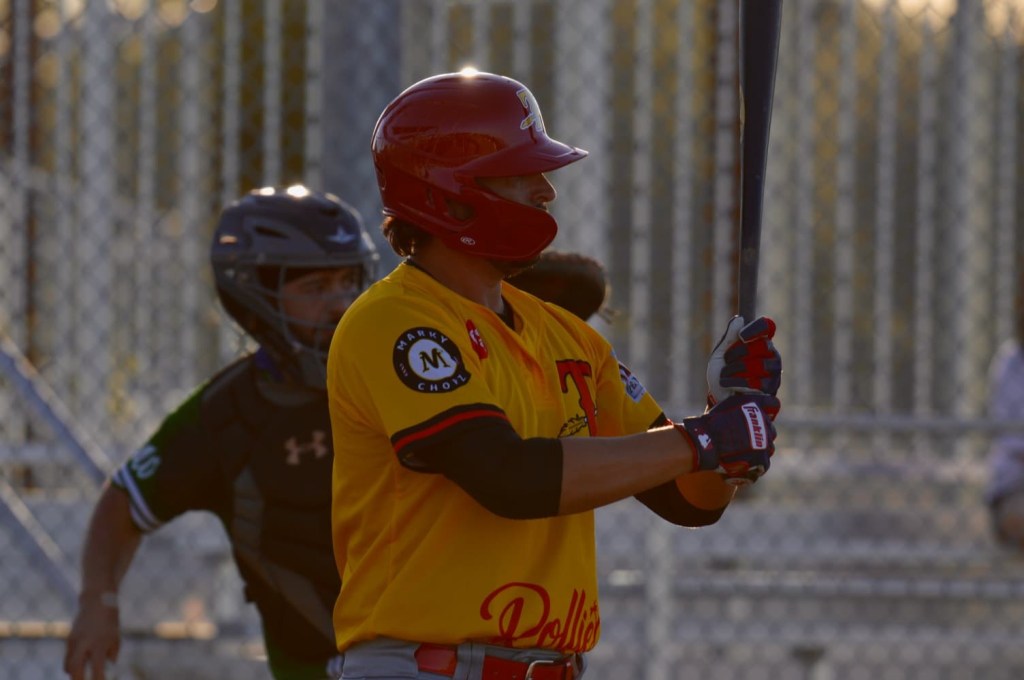
Some of his favorite memories are the small, ordinary ones: playing Little League with his younger brother and then sharing the same high school team for a season. Those long friendships, a decade of teammates before everyone scattered to college, stuck with him.
“Not only regular season high school baseball, but American Legion summer baseball was some of the most fun I ever had,” Jankowski said. “We were very successful. We had a really good team, and most importantly, we had a lot of fun. Playing with the same guys I’d known for nearly ten years before we all went off to college made it even more special.”
The College Grind and Matt’s Biggest Challenges
Out of high school, Jankowski was recruited to a couple of different schools but made his decision to go to Taft College, a junior college in California. By his sophomore year, he was named Taft’s number one starter.
After his sophomore year, Jankowski was recruited to Central Methodist University, an NAIA school in Missouri. After his second year there, he was named the number one starter once again.
But his journey wasn’t without setbacks. He recalled a high school senior-year injury. Three days before the state tournament, Matt suffered a broken leg from a rundown drill. Then, at Central Methodist in his senior year, he suffered an elbow injury to his throwing arm which required an extended rehab period.
For Jankowski, the toughest part of his injuries wasn’t the physical pain. It was the frustration of being sidelined when his team needed him most.
“A lot of times, the hardest thing about dealing with an injury isn’t just the fact that you can’t contribute after working so hard to get to that point in the season,” Jankowski explained. “It’s also trying to stay connected to the team when you’re stuck in rehab or taken out of your normal routine.“
He also pointed out that adversity in baseball doesn’t just come from injuries. “The more you play, the more people you meet — coaches, managers — and sometimes you don’t see eye to eye with them. Whether it’s about where you’re at in the lineup or how you’re being used, it can be frustrating. But at the end of the day, you’ve got to grind through it, do your work, and stay professional.”
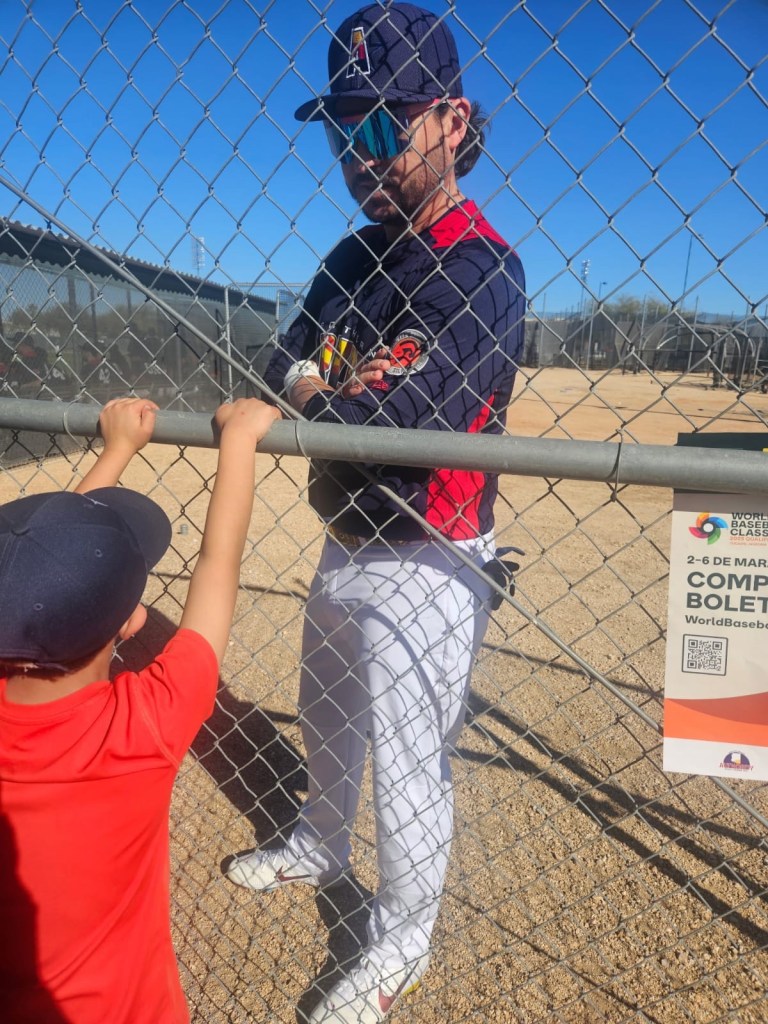
Even with setbacks, Jankowski holds onto a positive outlook. “Looking back, the good times far outweigh the bad. I’ve talked with other players, and sometimes you don’t get to finish on your own terms. More often than not, that decision gets made for you. But for me, even with the injuries and the challenges, I’ve been able to keep working through it and putting myself in position to play again. That makes it all worth it.”
Developing a Routine in College
Looking back at his college days, Jankowski emphasized how developing a structured routine was one of the biggest lessons he took away.
“With regards to baseball in college, I think it’s really developing a routine when you’re—certainly younger in little league and even in high school, everybody’s a pretty good athlete. Everybody works at what they do, but it’s not at the level of intensity that college is,” he said. “So at college, you are, you know, certainly you’re going to school and taking care of business that way, but you are doing so much more structured work that is very specific and important to what you want to translate into success onto the field.”
He detailed what that structured work looked like for a starting pitcher. “Those are physical workouts in the gym, running, pliant metrics and things like that, or even something people don’t think about—but coming from the world as a pitcher, and certainly as a starting pitcher, starting pitchers have got kind of lengthy and intricate warm-up routines that they go through the day that they pitch: the long toss, the different drills and activities they do to get themselves ready to throw, hopefully 100 plus pitches and go seven innings and try to get a win.”
Preparation extends beyond just game day. “Outside of that, you’ve still got all of these days in between where you’re not going to play that you still have to take care of your body and put yourself in a position to, when your name is called, be ready to go. And that was a big learning experience, and there are things from that that I still take on today and use to try to get myself prepared.”
Even now, he applies those routines to maintain his health and performance. “I do try to do things throughout the course of the week to make sure that I am in good, ready condition so that not only can I perform well, but when I go to work on Monday, I feel okay. I don’t feel like my body’s all banged up afterwards.”
He also stressed the individuality of routines. “Everybody’s routine is individual to each person, so that they’re doing what they feel gets themselves ready. Even what you see on the field is probably only half of it. There’s a whole bunch of stuff that they’re doing beforehand to continue to get themselves ready to go. And that’s something everybody has to determine, it is what they want to do. Everybody’s got their own routine, and you just have to figure out, whether you see somebody else do it or just learn over time, this is what I need to do to make sure I’m ready to go.”
The Tribe: Next-Level Competition and Camaraderie
For Matt Jankowski, playing with the Old Pueblo Tribe has been a unique experience, even compared to his years in college and other adult leagues. “Oh, I would say this is certainly the best adult league,” he said. “It’s hard to call this an adult league team because of just how good this team is and the fact of the purpose behind it. Some of the guys on the team went on to play in different professional teams… there’s six or eight guys right now who are in Mexico representing Team USA.”
What sets the Tribe apart, he explained, is the blend of elite talent and team culture. “The thing with this team was really just the quality of ball players that were on it up and down the lineup. I mean, the fact that we’ve got so many pitchers who are still throwing 90 plus miles an hour. That’s not really adult league, Sunday league type of stuff that you see. But this group of guys got along together really well.”
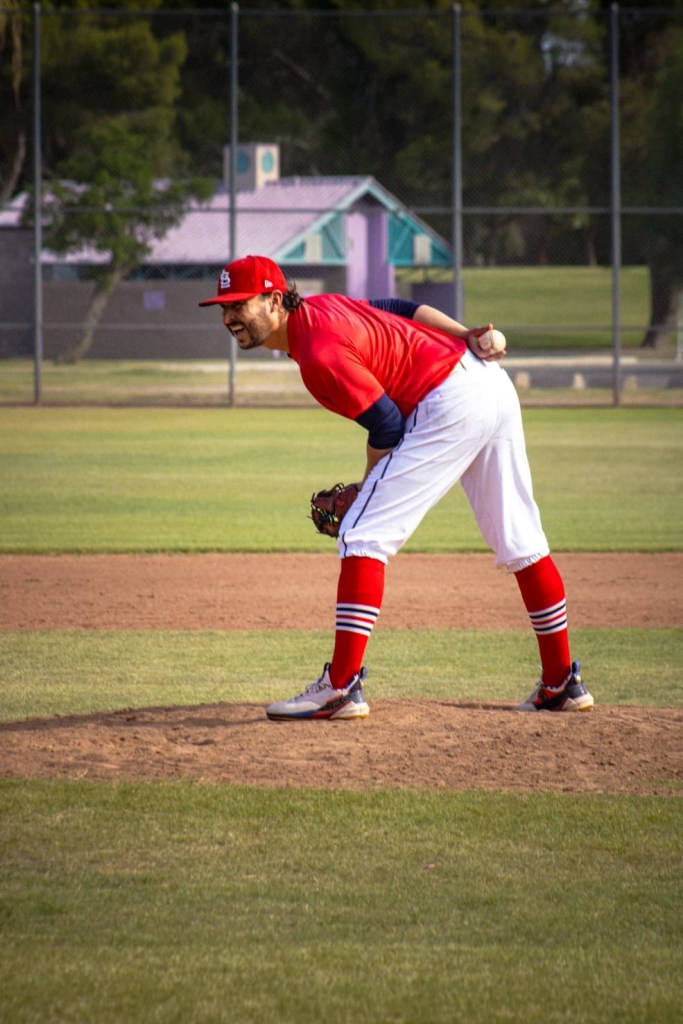
Inside the dugout, Matt said, the atmosphere was competitive but supportive. “We did a lot of intrasquad games, where you’re going head to head against your teammates. And that was a lot of fun because in the dugout, you’ve got your own little personal showdowns and being able to rib one another depending on who gets the upper hand in a situation is a lot of fun too. Especially when everybody’s given their best and their best is very good. These are legit competitions that are going on in the batter’s box and on the pitcher’s mound.”
He also pointed out how the camaraderie adds to performance. “There wasn’t anybody on that team I felt like had much of an ego. So being in the dugout and joking around or talking about situations — it was all a lot of fun. It made it so that the next time you came up, if you didn’t get the better of that exchange, you had a little bit more in the tank to try to change that on your next opportunity.”
Matt reflected on how this level of play compares to other teams he’s faced. “Most of the guys on the team have played college baseball, and a lot of the teams that we’ve played against, they’re pretty high-level competition. I would think they played at least some level of college baseball. What I do feel, though, is now that I’m one of the older guys, having played a lot of baseball, being able to manage emotions not getting too high, not getting too low, maybe gives me a little advantage over someone who hasn’t had those experiences.”
That leadership extends beyond performance on the field. “One of the things most ball players do, especially on a team like the Tribe where everybody gets along really well and everybody’s a good ball player, is they talk to everyone. They’ll ask, ‘What are you seeing this guy do?’ or, ‘Can you watch this next at-bat? Did you notice if I’m lunging at the ball or getting too handy with my swing?’ That’s not uncommon over the course of a season or throughout a game.”
Ultimately, the combination of skill, attitude, and connection is what makes the Tribe special for Matt. “It’s a big credit to Marky and Gary for putting this thing together. Everybody out there wanted to play ball and could play ball in some capacity. When you have a lot of guys who get together with the same interest and the same desire, you’re all going to mesh pretty well. Everybody’s pulling for each other, everybody’s rooting for each other, giving pointers and tips. I don’t know how you can’t succeed when you’ve got that sort of setup.”
Whether on the mound or in the dugout, Matt said the experience has reminded him why he fell in love with baseball in the first place. “That camaraderie is one of the best parts. Everybody’s rooting for one another, and that’s awesome. That’s really what makes playing here so fun.”
The Last Outing: Locked In
One of the performances that stood out this year came in a relief appearance late in the season. Called in mid-inning without the luxury of a full warmup, Jankowski found a rhythm fast. He finished 4.1 innings, gave up no hits, no runs, struck out six, and the streak, he retired 13 straight batters across his outing.
“It was one of those nights where everything I threw was working,” he said. “I had a good fastball, a curveball, a changeup, and the defense behind me made plays too. Sometimes you just get in the zone and cruise.”
It was the kind of outing that reminded teammates and fans of the veteran presence he brings: calm under pressure, prepared when his number is called, and willing to do whatever the team needs.
Offseason, Family, and Staying Ready
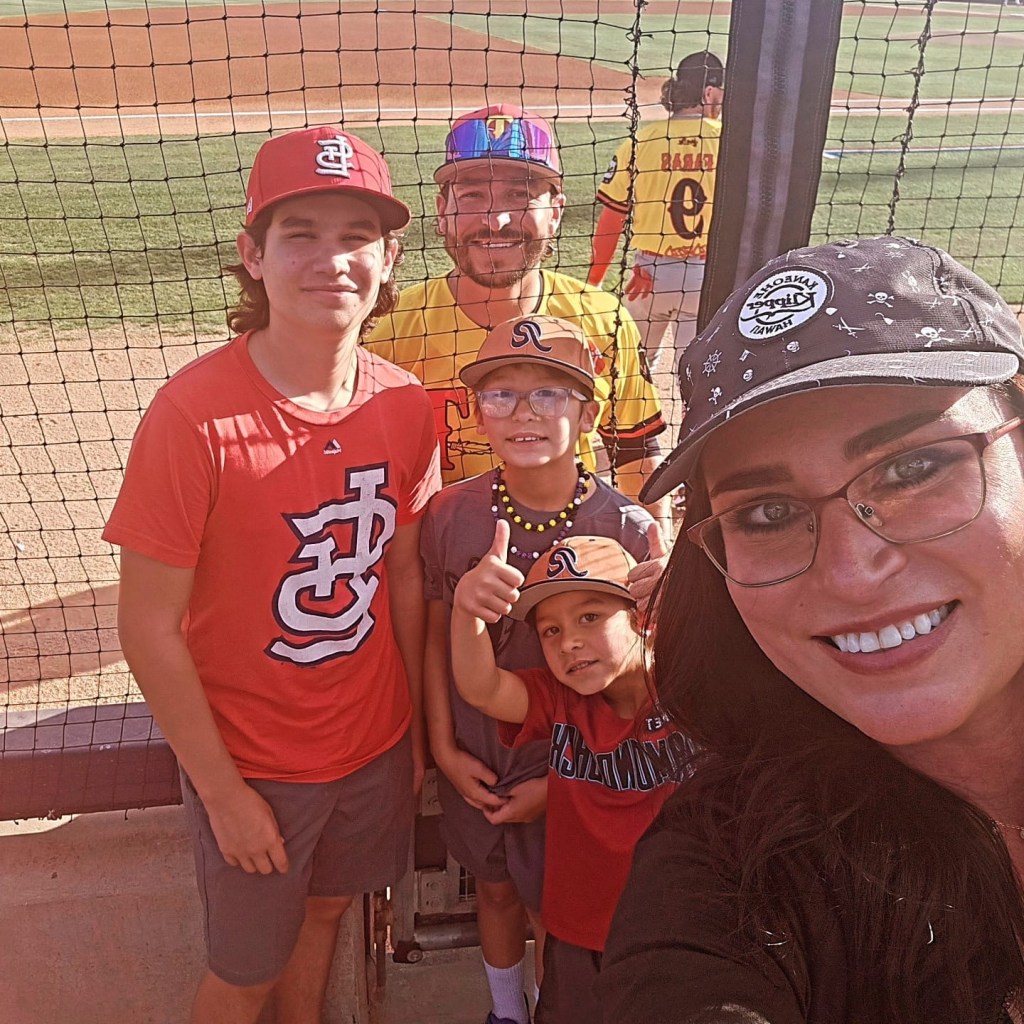
Off the field, Jankowski’s life is busy. He’s not just a player; he’s a father and a coach to his three sons, and he works in the community. “I’m the deputy director of Parks and Recreation for the town of Oro Valley,” he said. “My office is at our community and recreation center, so it’s pretty easy for me to come out and hit the gym.” That access helps him build consistency in strength and conditioning, a major focus as he gets older and wants to stay healthy enough to keep playing.
He plans to keep his reps up through winter leagues and coaching, saying he may get time in local winter action to keep his timing and arm in shape. For Matt, more baseball means more chances to enjoy the small victories that keep him hooked on the game.
Parting Advice from Matt
If there’s one piece of advice Matt would give players of any age, it’s simple: don’t lose the joy. “Try to stay positive,” he said. “This is supposed to be fun. The work before the games — the practices and preparation — might not always be fun, but it pays off. Do that extra round of hitting or that extra workout. You’ll never be unhappy you did it.”
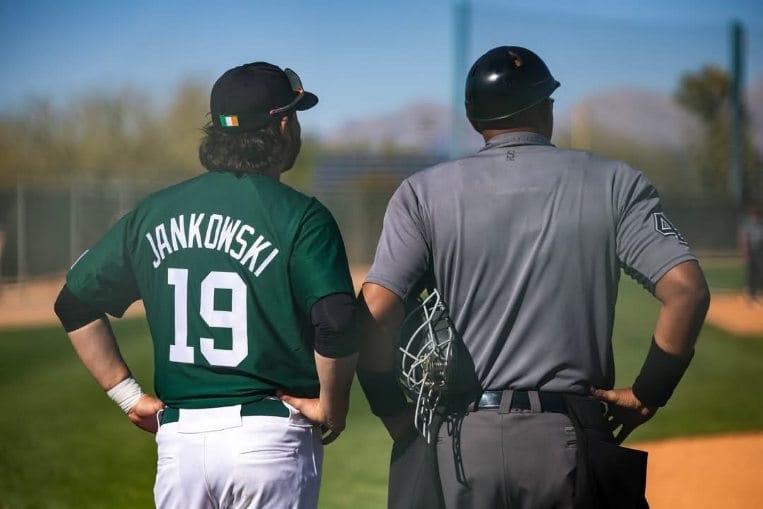
He also tells his younger self what he tells others now: do a little bit more. “There’s always somebody working harder than you. If you want it, dig in. That extra bit of work pays dividends.”
For a player who’s been around baseball for most of his life, the message isn’t about fame or money. It’s about community, the clubhouse jokes, the long bus rides, and the nights when everything clicks. That, for Matt Jankowski, is more than enough reason to keep showing up.



 Bear Sports News
Leave a comment