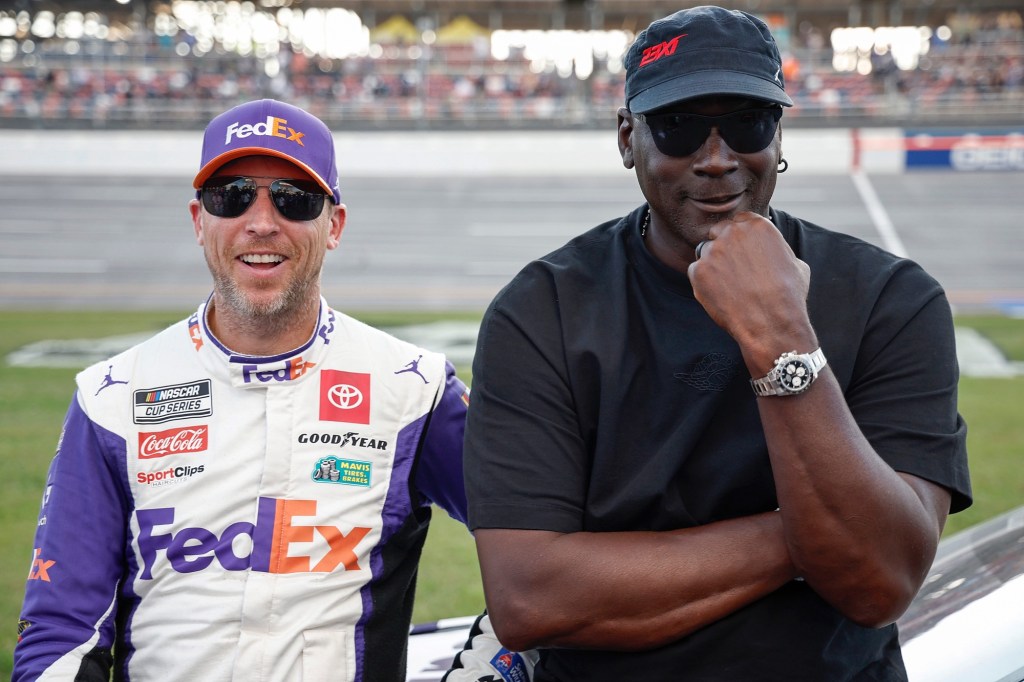
The battle between two NASCAR teams and the sanctioning body has turned into one of the most important legal fights in the sport’s history. Michael Jordan’s 23XI Racing and Front Row Motorsports are taking NASCAR to federal court, arguing that the organization has used its overwhelming control over top level stock car racing in a way that violates antitrust laws. With a jury set to hear the case in Charlotte, the trial will determine whether NASCAR misused its monopoly power or whether the conflict is simply the result of failed charter negotiations. To help make sense of how this dispute formed and what each side is fighting for, here is a full Q&A that walks through every key point of the case.
What is happening in Charlotte this week?
A major antitrust case is beginning in federal court in Charlotte, North Carolina. Michael Jordan’s 23XI Racing and Front Row Motorsports are taking NASCAR to trial, accusing the organization of using its overwhelming control over top level stock car racing in an unlawful way. The lawsuit is centered on how NASCAR operates and whether it used its position to limit competition.
Who exactly is suing NASCAR?
The two plaintiffs are 23XI Racing and Front Row Motorsports.
23XI is majority owned by Michael Jordan and also backed by Denny Hamlin, a three time Daytona 500 champion. Front Row Motorsports is operated by Bob Jenkins, who built his wealth through fast food franchises. Together, the teams claim NASCAR has engaged in monopolistic behavior.
What does NASCAR say in response?
NASCAR and its CEO Jim France, a member of the sport’s founding family, argue that nothing illegal has taken place. They believe the conflict is rooted in disagreements over the charter system. NASCAR insists it has improved revenue for teams and that its long history of investment and development contradicts the idea that it has misused its position.
What has the judge already decided?
Judge Kenneth D. Bell has ruled that NASCAR does have monopoly power within the market of premier stock car racing. That part is no longer in question. What the jury must now determine is whether NASCAR used that power in a harmful way that violated antitrust laws. The trial is expected to last more than two weeks.
What is potentially at risk for the teams?
If 23XI and Front Row lose, both face the possibility of shutting down. Polk, a co owner of 23XI, stated in a court filing that losing their charters would cost the organization about 24 million dollars in revenue. Open teams do not receive the same guaranteed payouts and do not have locked in spots for every race.
What could happen if NASCAR loses?
The sport itself could be reshaped. Judge Bell has already mentioned that resolving an antitrust violation might require NASCAR to sell racetracks or break apart the existing charter system. Depending on how deep the remedy goes, it could even lead to the France family giving up some or all control of NASCAR. A settlement during the trial remains possible, although tensions between the sides have already damaged NASCAR’s public image.
What parts of the law matter here?
The case originally included more claims, but both sides narrowed it down. NASCAR’s counterclaim, which accused the teams of colluding, has already been dismissed by the judge. The teams also dropped a separate claim once the court ruled that NASCAR is a monopoly. It is not illegal to hold a monopoly, but it is illegal to abuse that power. The jury must decide if harm occurred because of that power.
What is the teams’ main contention?
23XI and Front Row argue that NASCAR used exclusionary tactics to avoid meaningful competition. Their claims include NASCAR’s control of racetracks, preventing other series from using those facilities, blocking Cup teams from using their cars elsewhere, and acquiring ARCA to eliminate another potential competitor.
How does NASCAR defend itself?
NASCAR points to its charter system as a unique structure in sports. The system gives teams guaranteed starting positions and a share of revenue. According to NASCAR, the disagreements came from difficult negotiations, not from illegal behavior. NASCAR also emphasizes that it has raised team payments due to new media rights deals.
How did things escalate to a courtroom battle?
The roots go back about three years, when charter negotiations began. Many owners believed this was their chance to secure permanent charters. Curtis Polk of 23XI strongly pushed for that outcome and repeatedly stressed that the teams should stand firm. When NASCAR refused to agree to permanent charters, the frustration grew. Once talks fell apart, 23XI and Front Row filed their lawsuit.
Why did settlement talks fail?
For nearly a year, both sides were far apart. Even court ordered arbitration did not move things forward. In October, NASCAR requested a formal settlement conference, which led to two days of serious discussions. At that point, some thought an agreement might come during the championship weekend in Phoenix. Instead, talks again collapsed. Publicly released text messages and additional court rulings only made the gap wider. A settlement could still occur after the trial begins, but none has been reached so far.
What messages or revelations have drawn attention?
Several private text conversations have become public:
• Former NASCAR president Steve Phelps called Richard Childress insulting names and wrote that Childress should be punished for opposing the agreement.
• Phelps and executive Steve O’Donnell reacted strongly to drivers planning to compete in the SRX series, calling the series harmful to NASCAR.
• Denny Hamlin wrote that he had deep frustration with the France family.
• A 23XI leader wrote that the ongoing issues might only be resolved once Jim France is no longer alive.
• After 13 teams signed the charter agreement, Michael Jordan privately criticized the organizations that cooperated with NASCAR.
These texts added fuel to an already intense legal fight.
What do the financial documents reveal?
NASCAR reported more than 1.7 billion dollars in revenue last year and more than 102 million dollars in profit. Records also show large annual payouts to the France Family Trust that exceeded 100 million dollars in both 2023 and 2024.
Teams, in contrast, reported consistent financial losses. From 2021 through 2024, Cup Series teams averaged more than 1 million dollars in losses per car per year. They lost about 2.5 million dollars per car in 2024.
Front Row was among the teams operating at a loss. 23XI earned an average of 2.2 million dollars per year from 2021 to 2023 but then lost more than 2 million dollars in 2024.
The teams’ request during negotiations was a payout structure that would amount to 20 million dollars per car. The new charter agreement comes out to about 12 million dollars per car, which is higher than the previous average of 9.7 million dollars but still well short of the teams’ goal.
Who seems more likely to win this case?
Based on what is already known from the court filings and the judge’s early rulings, both sides enter the trial with advantages, but the teams appear to have early momentum. Judge Kenneth D. Bell has already determined that NASCAR holds monopoly power in premier stock car racing, which removes one of the biggest hurdles the teams would normally need to prove. That ruling alone gives 23XI and Front Row a stronger foundation than most challengers get in antitrust cases.
At the same time, proving that NASCAR abused that power is much harder than establishing that it exists. NASCAR will argue that the charter negotiations were simply business disagreements, not illegal behavior. The organization will also point to the large increase in team payments from the new media rights deal as proof that it is supporting the teams rather than harming them.
The teams, however, benefit from several factors:
• damaging internal messages revealed through discovery
• documented financial losses for most teams
• examples they claim show exclusionary behavior
The outcome may come down to whether the jury sees NASCAR’s actions as normal business strategy or as deliberate moves to block competition. If the jury is swayed by the leaked messages and the financial imbalance between NASCAR and the teams, that could tilt things in favor of 23XI and Front Row.
With all of that considered, the teams appear to have the early edge based on what the judge has already decided and the evidence that has surfaced. But antitrust cases are unpredictable, and NASCAR still has a strong chance if it convinces the jury that the dispute stems from failed negotiations rather than unlawful conduct.

 Bear Sports News
Leave a comment