
As fans enjoy the craziness that is the MLB postseason, there is another storm brewing that will keep fans talking all winter long. Those conversations will likely carry the same question among all of them.
“When do you think baseball will come back?”
It’s going to be a long winter, and fans have every right to be confused about this all. We haven’t had a labor negotiation this serious since 1994, when, if you aren’t aware, the entirety of the MLB postseason was cancelled due to a lockout. The cancellation of the ’94 World Series forced MLB to make drastic changes to the league.
These labor negotiations have the possibility to see a number of games cancelled outright. Will we see another 60-game season? Who has more to lose in this lockout? There are a number of questions that have emerged due to the complexity of this whole scenario. We will do our best to answer all of those today, and if you have any questions, make sure to reach out to us on socials, or in the comment section below.
How Long Should We Expect These Negotiations To Take?
Both sides have been making decent ground on proposed terms thus far, but they are still far apart on multiple issues. The first official meeting took place on May 12, 2026, where both sides met to exchange preliminary opening proposals, from a salary cap to an update to free-agency rules.
It does seem like both sides are trying to get a handle on the smaller issues first before they tackle the issue of a salary cap and floor. Once that issue comes up, though, we all know that it will take a while for both sides to find some middle ground.
If I had to guess, though, the latest Opening Day will likely take place is on Memorial Day weekend.
First off, there is a magic number, and unfortunately, it won’t give us the Powerball numbers. There’s a threshold in the TV contracts where, if a work stoppage or lockout cancels at least 60 games per team in the 2027 season, it will trigger an automatic one-year extension of MLB’s national media rights deals through 2029.
Broadcasters would have to absorb the losses of the unplayed games in 2027, but the 2029 extension year would either have them paying reduced rates or zero rates. Rob Manfred and MLB owners want to avoid delaying the media rights negotiations that are set to expire with all their partners in 2028. MLB commissioner Manfred structured the deals this way to create an open map for 2029. MLB has plans to offer a massive, bundled package to streaming and broadcast companies that helps seamlessly
“FOX/FS1, TBS, Apple TV+, NBC/Peacock, ESPN and Netflix would all gain another season, if the 2027 season sees more than 60 games cancelled, per team.”
Owners will feel the pressure of Manfred wanting the 60-game deadline to be met, and, well, owners don’t want to lose out on their share of $2 billion that comes annually from the TV deal. The players have nothing to lose in this situation; the players who need help will receive it from the union. Reports have stated that the MLBPA has built its largest financial war chest in history to specifically take on this possible lengthy lockout. The union is reportedly holding over $500 million in assets, which was built by players collectively agreeing to withhold 100% of their licensing revenue over consecutive years to serve as an emergency fund. This fund will help players cover personal fixed expenses while their game checks are halted.
The pressure is going to be on the owners, and if a deal isn’t reached by Memorial Day weekend, they will be forced to lose $2 billion in 2029 from the losses of the revenue from the TV deals.
103 Game Season? What Do Fans Have To Look Forward To?
As the magic number of 60 has been placed, it’s likely that both sides will string this out to the last second, which is why no one should be surprised when Opening Day takes place on Memorial Day weekend. If you look on the MLB schedule, the 60-game mark hits right around then, so a deal wouldn’t be signed then. It’s likely that it gets signed at the end of April, allowing for a fast track of free agency and a shortened Spring Training.
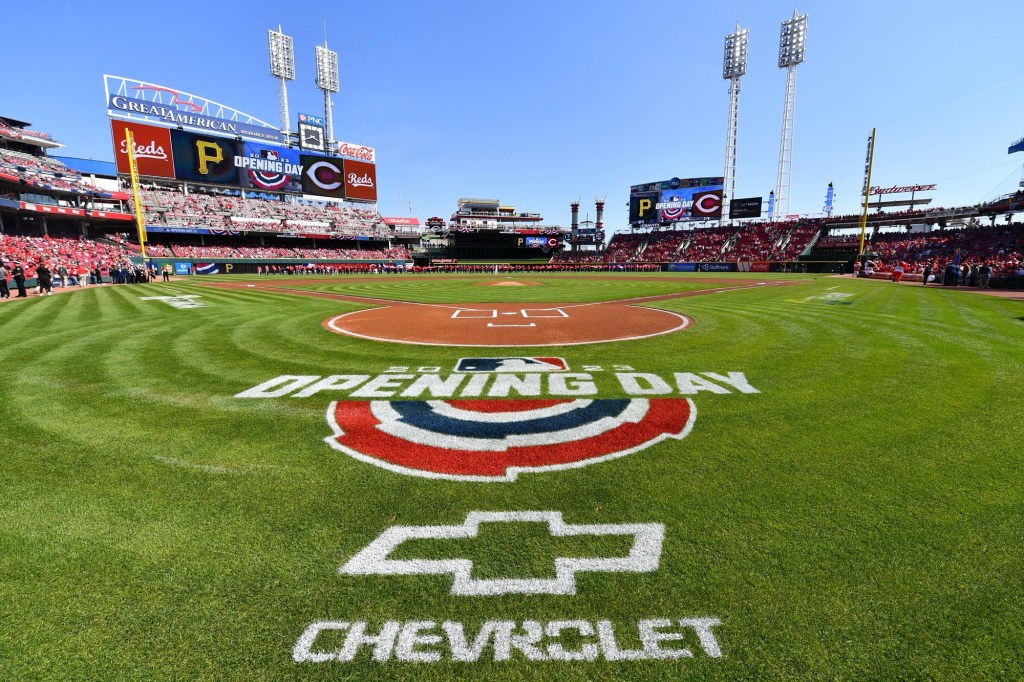
MLB can’t technically lose more than 60 games, so even if Opening Day is after Memorial Day, expect the league to set up some doubleheaders similar to 2020. No matter what, MLB will do its best to get 103 games into the schedule.
Other Than A Salary Cap, What Else Has Been Bargained?
Despite it being less than five months since negotiations began, both sides have brought multiple terms to the table. Your time is valuable to us, just like salmon is valuable to bears. I’ll keep it simple without all the extra words so we can keep streamlining this piece.
MLBPA’s First Proposal – May 27, 2026
- Increase the MLB minimum salary to $1.5 million in 2027, increasing annually to $2.2 million by 2031.
- Increase the pre-arbitration bonus pool from $50 million to $180 million, with annual increases afterward.
- Expand Super Two arbitration eligibility from the top 22% to 44% of players.
- Establish a $3 million minimum arbitration salary.
- Allow certain players age 30 or older to reach free agency after five years of service instead of six.
- Eliminate the qualifying-offer system.
- Raise the competitive-balance-tax threshold from $244 million to $300 million in 2027, increasing to $360 million by 2031.
- Create a Competitive Integrity Tax to penalize clubs that keep payroll below a specified level.
- Guarantee small-market clubs at least $240 million in annual revenue through enhanced revenue sharing.
- Require clubs to use revenue-sharing money toward improving their competitive product.
- Expand the Draft lottery from six teams to eight teams.
- Strengthen protections against service-time manipulation.
- Preserve baseball’s free-market system and reject a salary cap. MLB’s First Proposal – May 28, 2026
- Establish a hard salary cap and hard salary floor.
- Set the proposed 2027 salary cap at $245.3 million.
- Set the proposed 2027 salary floor at $171.2 million.
- Establish a seven-year CBA running from 2027 through 2033.
- Split MLB revenue 50/50 between players and clubs.
- Centralize local media revenue and distribute it equally among all 30 clubs.
- Use increased shared media revenue to help clubs reach the salary floor.
- Require clubs to remain below the salary cap and above the salary floor.
- Maintain guaranteed contracts.
- Introduce an escrow mechanism tied to player compensation.
- MLB estimated 12 clubs would need to increase payroll by a combined $617 million to reach the proposed floor.
- MLB estimated eight clubs would need to reduce payroll by a combined $578 million to reach the proposed cap.
- Replace the current revenue-sharing structure with the new centralized-media system. MLB’s Second Proposal – June 18, 2026
- Create separate Domestic and International Drafts.
- Establish a $200 million signing-bonus pool for each draft.
- Create a hard-slotted 12-round Domestic Draft.
- Allow unlimited signings of players who go undrafted.
- Allow limited trading of Draft selections.
- Require up to 10 selected players to attend the MLB Draft.
- Provide a $50,000 Draft Attendance Bonus to players required to attend.
- Require Draft Combine medical evaluations.
- Reduce the Draft lottery from six teams to four teams.
- Prevent a team from receiving a lottery selection in three consecutive years.
- Eliminate Competitive Balance Draft picks.
- Beginning in 2028, require domestic Draft prospects to be 20 years old by September 1 and at least two years removed from high school.
- Create an International Draft with the same initial $200 million bonus pool.
- Set the minimum international Draft age at 18 by September 1.
- Create an international scouting and development league.
- Create an international Draft Combine.
- Establish additional protections for international players and trainers.
- Prohibit borrowing against future international signing bonuses.
- Establish stronger penalties for people who provide PEDs to young international players. MLB’s Third Proposal – June 25, 2026
- Reduce the reserve period from six years to five years for players age 30 or older.
- Allow 354 current MLB players to potentially reach free agency one year earlier under the proposal.
- Eliminate the qualifying-offer system.
- Allow clubs to retain certain five-year players age 30+ with a one-year contract worth the average salary of the 125 highest-paid players.
- Increase the minimum salary from $780,000 to $1 million for players with at least two years of service.
- Establish a $900,000 minimum salary plus a $100,000 service bonus for players who receive a full year of service with zero or one year of service.
- Increase the pre-arbitration bonus pool by 30%, from $50 million to $65 million initially.
- Eventually increase the pre-arbitration bonus pool to $75 million.
- Create a “Cornerstone Player” system, similar to NBA Bird Rights, allowing clubs to offer longer and larger contracts to players they already have.
- Allow clubs to offer up to six years to retain their own cornerstone players.
- Allow up to five years when signing another club’s free agent.
- Eliminate new deferred compensation.
- Keep existing deferred contracts intact.
- Make these player benefits conditional on acceptance of MLB’s proposed salary cap and floor system.
MLBPA’s Second Proposal – July 1, 2026
- Expand MLB active rosters from 26 to 28 players for the first 15 days of the championship season, with a 14-pitcher maximum.
- Allow placement of players on the 60-day IL as early as the November Tender Deadline, allowing clubs to utilize those additional roster spots during free agency.
- Reduce in-season minor-league option assignments from 5 to 3.
- Accelerate eligibility for the Rule 5 Draft to ensure one takes place in 2026 and every year of a new CBA.
- Provide MLB service time and salary for all players in September.
- Provide service-time protections for pitchers who are optioned to the minors over the All-Star break.
- Provide service-time protections for pitchers optioned immediately after a game in which they meet certain performance/workload thresholds.
- Allow players to access their team’s collected non-proprietary data and video.
- Strengthen protections against unnecessary roster manipulation.
- Create additional Major League job opportunities for players coming out of Spring Training.
MLBPA’s Third Proposal – July 21, 2026
- Keep the 20-round MLB Draft.
- Preserve eligibility for high school players.
- Preserve eligibility for junior college players.
- Allow college sophomores to enter the Draft.
- Increase Draft signing bonuses.
- Preserve the ability for players and clubs to negotiate signing bonuses.
- Preserve Competitive Balance Draft picks.
- Allow lower-revenue clubs to receive larger Draft bonus pools.
- Provide additional bonus-pool increases to lower-revenue clubs that make the postseason.
- Reduce penalties for clubs that exceed their Draft bonus pools.
- Move the MLB Draft to June.
- Allow limited trading of Draft selections.
- Increase compensation through the Incentive Bonus Plan.
- Prevent clubs from deducting certain bonuses from continuing-education benefits.
- Reject MLB’s proposal to eliminate high-school and junior-college players from the Draft.
MLB’s Fourth Proposal – August 27, 2026
- Create weekly 26-man rosters, with clubs establishing their roster every Monday.
- Allow roster changes during a limited window following Sunday’s games.
- Create exceptions for injuries, bereavement, paternity, trades and waiver claims.
- Reduce position-player IL minimums from 10 days to one week.
- Reduce pitcher IL minimums from 15 days to two weeks.
- Change the 60-day IL to a 12-week minimum.
- Reduce in-season minor-league options from 5 to 4.
- Establish minimum option periods of one week for position players and two weeks for pitchers.
- Allow clubs to carry 14 pitchers on the active roster instead of 13.
- Accelerate Rule 5 Draft eligibility by one year.
- Allow Rule 5 selections to be optioned to the minor leagues while remaining on the selecting team’s 40-man roster.
- Create a new offseason transaction calendar.
- Establish a “Quiet Period” after the World Series during which teams can negotiate with free agents but cannot officially finalize agreements.
- Allow trades and re-signings during the Quiet Period.
- Open official free-agent signings at the Winter Meetings.
- Establish a free-agent signing window running through December 21.
- Create a “Frozen Period” from December 21 until the first Monday in February.
- Prohibit free-agent signings and trades during the Frozen Period.
- Reopen transactions on the first Monday in February.
- Make all of these roster and transaction proposals contingent upon MLB receiving a salary cap and floor.
Attendance Is On The Rise; Will MLB’s Growth Survive?
Since the implementation of the pitch clock, attendance in MLB has been on an impressive rise. From 2023–2026, MLB reached attendance marks of over 70 million, with 2026 being the highest total since 2017. It’s the first time that MLB has seen a four-year growth in attendance since 2004–2007.
Stats from the 2026 attendance numbers
The Tampa Bay Rays saw a huge increase from 628,255 fans to 1,414,975 fans following their return to Tropicana Field.
The Dodgers, Phillies, Yankees, Padres, Blue Jays, Cubs and Mariners are responsible for 32.2% of the league’s attendance.
The Dodgers, Padres, Blue Jays, Phillies and Yankees are responsible for 24% of the league’s attendance.
The Dodgers (4,034,219) drew 5.05x as many fans as the Athletics (799,240).
We keep going back to the magic number of 60, but I think it’s a solid benchmark to keep in your mind during this read. It’s no doubt that MLB will see a down year in attendance. Using the 2026 numbers, we can estimate that attendance will see a drop of at least 30% if all teams were to play 104 games.
That number can definitely change with the addition of a salary floor.
Let’s just go forward with the thought that the league and the union agree to the league’s original floor, which was set at $171.2 million.
Without the addition of any free agency players, 15 teams would have to add to their payroll to meet the minimum payroll floor, and 10 teams would need to add over $40 million to their payrolls to hit that mark. There’s also no question either about whether any of those teams in the bottom 10 can make a huge signing, either. The revenue that they’ve brought in the previous three seasons could have all paid Ohtani upfront and even more for some teams.
This would force owners of smaller markets to finally spend, all while keeping the carousel going. The White Sox added Munetaka Murakami and other names in the 2026 offseason, and their owner is seeing that pay off. In 2025, the White Sox only brought in a little over 1.4 million fans through their gates, ranking 27th in the league. Fast forward to now, the White Sox were just 24,575 fans away from welcoming 2 million fans through the gates and are now 22nd in the league. A visit to the postseason also definitely helps bolster that revenue and attendance numbers.
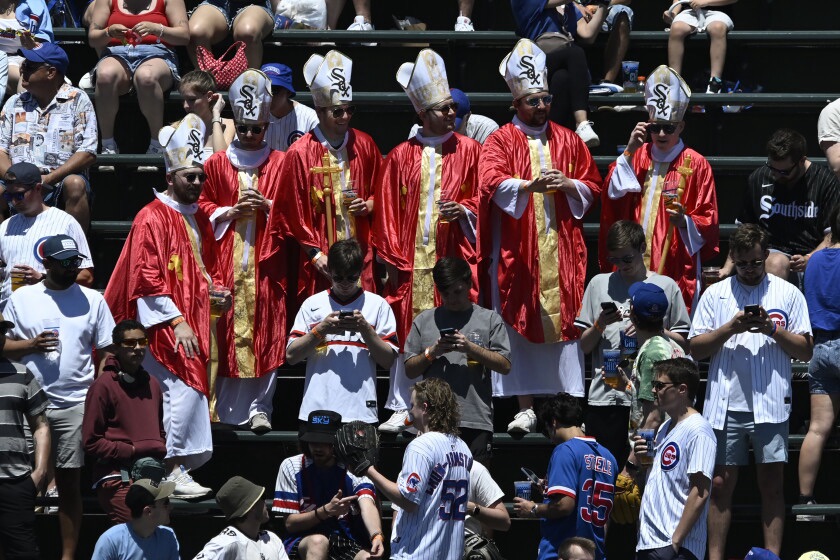
Fans will no doubt show up in herds to see a new A-class player or even support their team in the postseason. While we will definitely see a decrease in 2027 for attendance numbers, it’s no doubt that the implementation of a salary floor will help keep competition close and attendance growing. Yes, MLB’s growth will survive, but they should absolutely implement a salary floor to help force owners to spend, without moving players from their teams due to clubs cutting costs with a cap.
What’s The Quickest Way To Get MLB Back Once A Lockout Hits?
Everybody will answer this differently; some will say that a cap is needed, while others will say to keep the game how it is. In my opinion, I think it’s relatively simple. There have to be harsher penalties for teams surpassing the luxury tax. Currently, the teams that have the money will obviously pay the tax with no questions asked. This allows them to still run their teams with little to no effect on a year-to-year basis.
I’d like to see possibly the removal of draft picks and, for continued offenders, have a structured setup to punish them. It sounds harsh, I know, but at the end of the day, players won’t budge for a cap either. This could be a good middle ground that has already been set up; it just needs some fine-tuning.
There’s a whole ton of money to be made if you’re an MLB owner, and too many are comfortable walking away with maximum profits every season and forgetting about the fans. They want to see results on the field; they want to see big names want to join their teams and not mention them in an anonymous survey of the worst teams to join. Implementing a salary floor would force owners to actually spend those profits rather than walk away with another private jet.
We can go on and on about what we can change, but both of us know that the players won’t agree to a cap. While owners may not agree to a structure that will force them to spend more money, it’s no doubt that this may be where both sides will be at in the future.
One last note: we can all agree that the removal of deferred contracts, or a limit on deferred money, is definitely needed.
Will Fans Be Used As Leverage?
When both sides sit down, one word that will continue to come out of their mouths is “fans.” Both sides want the public perception to be that the lockout is the other side’s fault and that they are doing everything they can for the fans. For example, we’ve already seen it during these negotiations.
MLB is completely ready to remove blackouts! Now, don’t jump for joy, because this comes under the contingency of the MLBPA accepting a salary cap and floor. Yeah, I don’t see it happening either, but it’s only a matter of time before MLB brings it back up in the public eye.
This time, though, it seems like the fans are ready to be out in full force and on MLB’s side. The league and its owners know that the Dodgers’ recent moves left an extremely sour taste in fans’ mouths. No matter where you stand, whether you’re a Dodgers fan or a fan of the other 29 teams, everyone can agree that the majority of fans want a salary cap and truly believe that it will even the game.
Now that the ball is in MLB’s court, why not offer the removal of blackouts for fans if they can push for a cap-and-floor system? It only helps their public opinion in these negotiations, and in such a public negotiation, public opinion is a huge bargaining chip. The owners may have their backs against the wall with this 60-game deadline, but the fans could be the “Hail Mary” that they need.
How Busy Will The Offseason Be?
If you love chaos, you better sit back, make about 20 pounds of popcorn and get comfortable. This offseason is going to be full of moves, and you likely won’t have to wait until late in the offseason to see the big moves. No one knows how these negotiations are going to go, and both sides know that they will want to get most of their deals done before the lockout hits.
Multiple players have stated that they’d like stability before the lockout is implemented, which only means one thing: early November through December 1 will be full of moves, extensions and everything in between. There are a few notable dates to be made aware of, and that’s the day after the World Series, the first five days and then after.
- Following the conclusion of the World Series, the next day players can officially file for free agency.
- For the first five days, teams have an exclusive window to re-sign their own departing free agents.
- After those five days, free agency officially opens and players are allowed to sign contracts starting at 5 p.m. ET.
Most years, the signings begin to ramp up after Winter Meetings, but with the possibility of signings being frozen and no discussion allowed to take place, it’s certain that the early portion of the offseason will be chaotic.
After December 1, until the end of the lockout, it will be dead quiet. Nothing will happen, and it will be as quiet as the walk to school after a rainy night. This is unfortunately going to be the longest portion of the offseason and the most boring.
As soon as the lockout ends, though, we will get the second part of the storm. The rest of the signings will come in a huge tidal wave and will be another fun time. If you’re a free-agency junkie, make sure you stick around for our free-agency rankings coming out after the conclusion of the World Series!
That’s all, folks! This was our first rendition of a Q&A for the craziness that will be the MLB lockout. It’s going to be the craziest offseason in history, and you’re going to want to be up to date on all of it. We are going to keep you updated on all things MLB this offseason, so make sure you subscribe so you don’t miss a single article. Thanks for reading, and if you have any questions you’d like answered in an article, drop them on socials or in the comments below!
As always, report any grammatical errors to bearsportsnews@proton.me


Leave a comment